
Homogenising / De-agglomeration
Homogenising and de-agglomeration address a specific problem: particles or droplets that have clumped together into loose clusters (agglomerates) need to be broken apart into individual, uniformly sized units, without necessarily changing the particle's underlying size the way grinding does. This is what produces a smooth, consistent texture rather than a gritty or uneven one, and it's a distinct step from grinding, since an agglomerate is a cluster of already-fine particles stuck together, not a single large particle that needs breaking down.
Applications and Product Types
Liquids and Emulsions
- Pigment and oil emulsions
- Face creams and gels
- Body lotions
- Petrochemical blending
Pastes and Suspensions
- Agro formulations
- Adhesives
- Sauces and pastes
- Resin dispersions
What We Cover
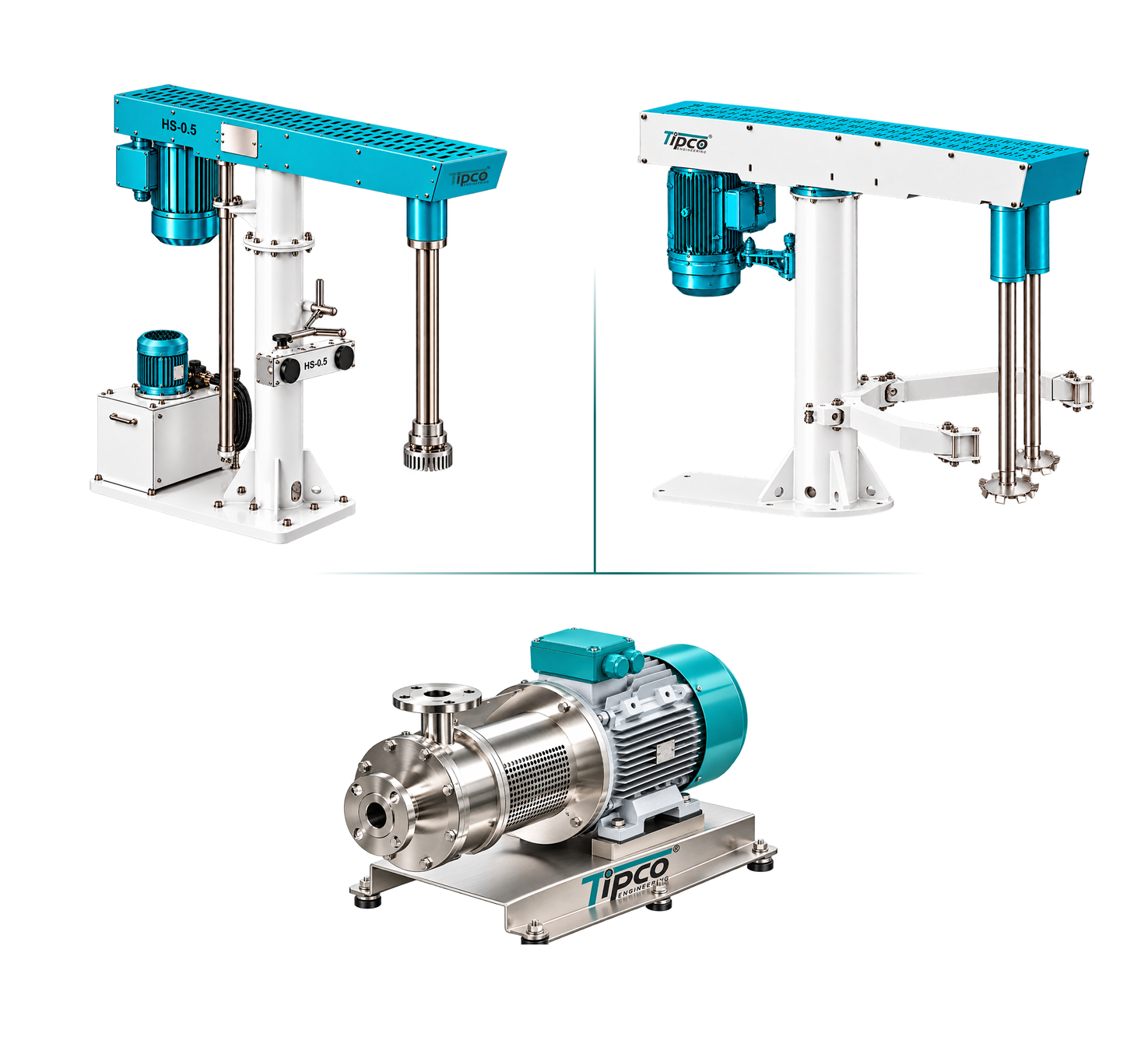
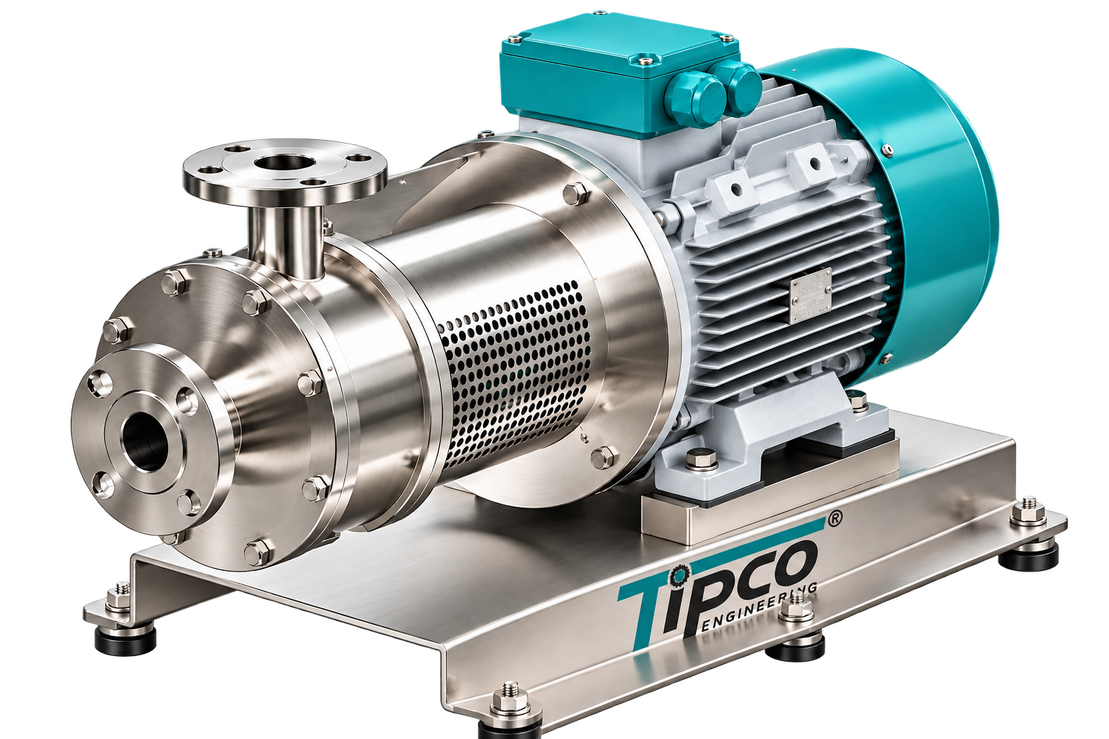
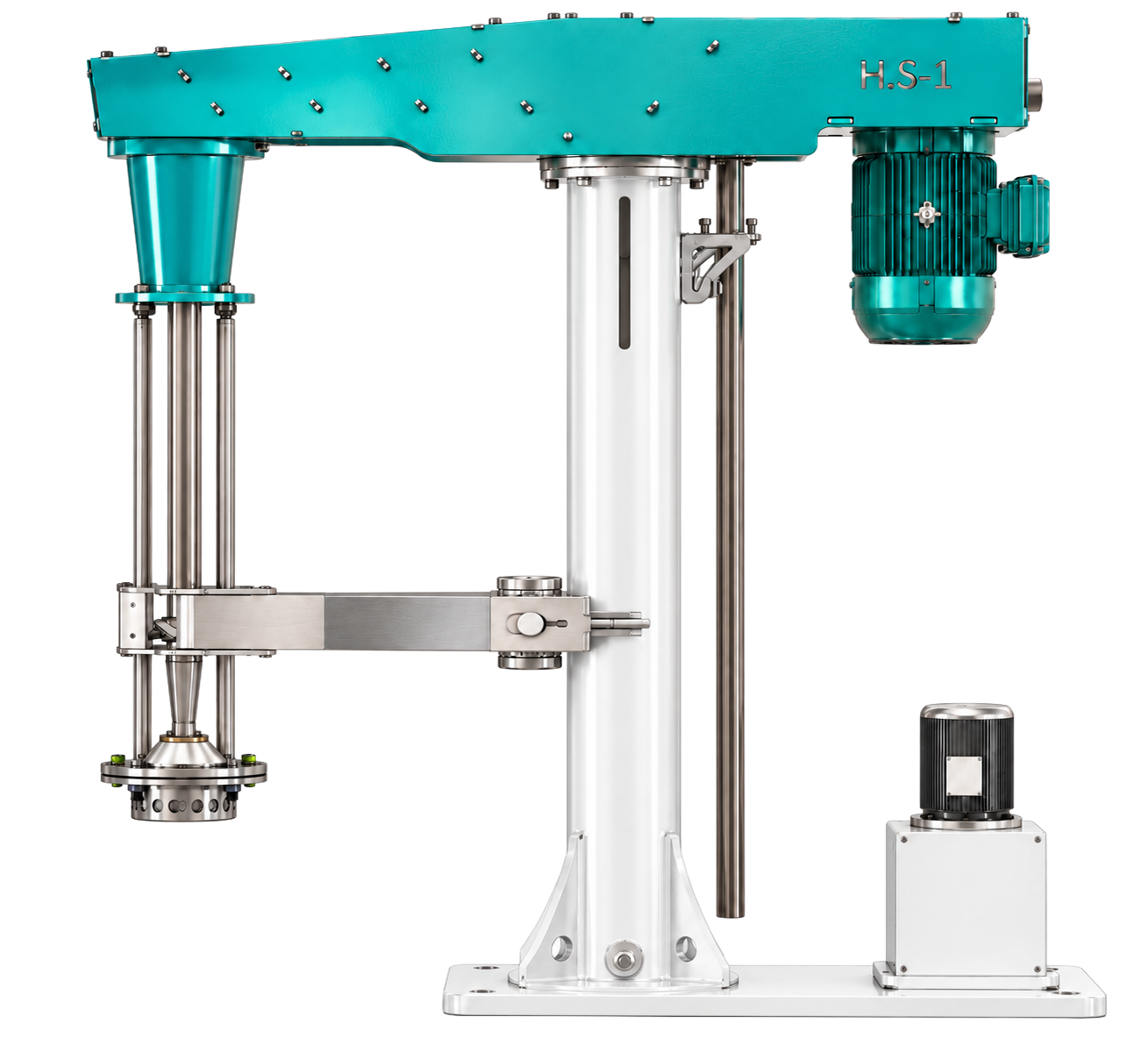
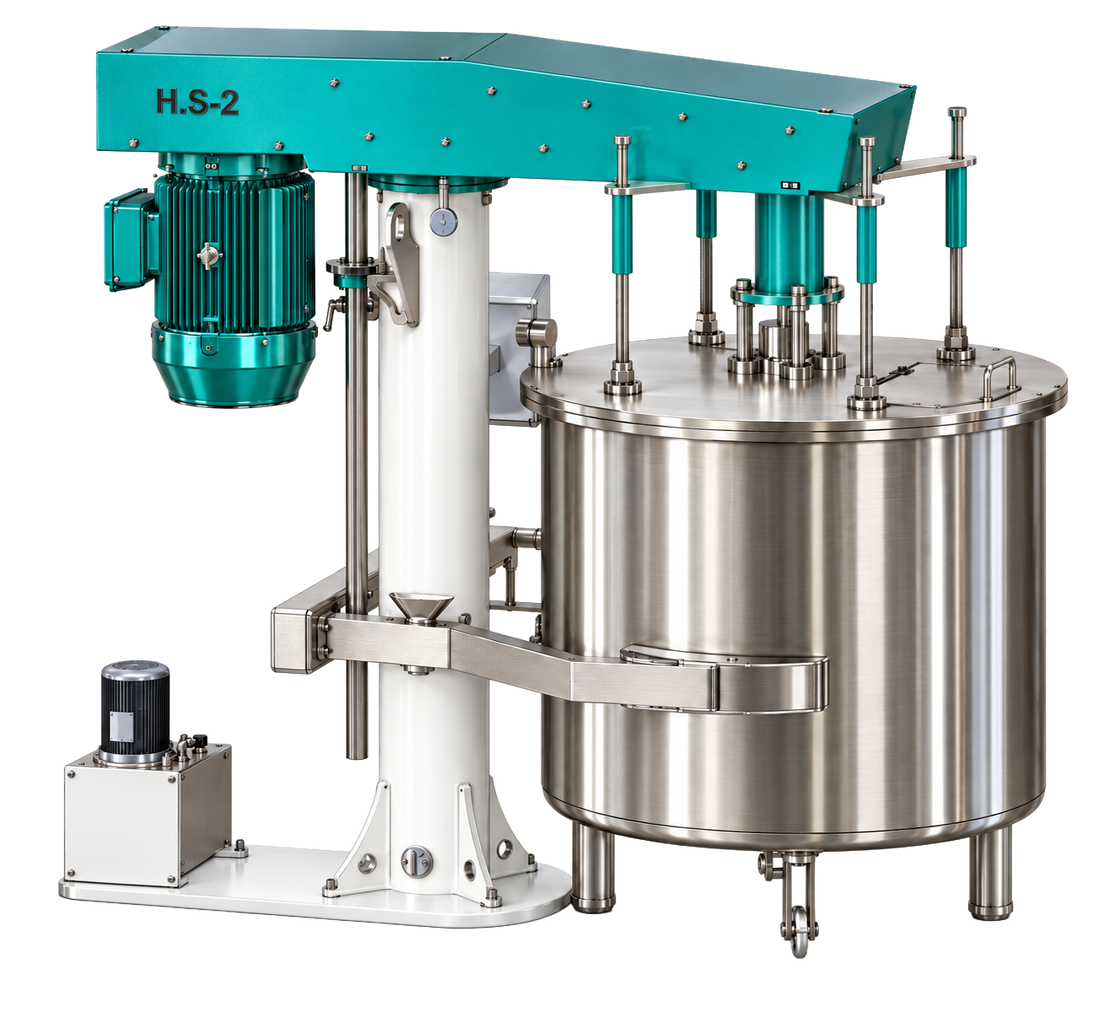
Rotor and stator high shear combines several steps in one unit.
Mixing and dispersing together
Fining and homogenising
Long-hole or round-hole for thicker products
Emulsifying, where needed
Liquid-liquid and liquid-solid
Mesh stator for low viscosity
How Tipco Performs This Process
Trial Your Formulation Before You Commit
Equipment selection for a new or reformulated product shouldn't be a guess. Our upcoming facility in Pune, developed in partnership with Lexamix, will let you run your own formulation on production-grade equipment and get real fineness, throughput and cycle-time data before placing an order. The facility is currently in development. Register your interest and our engineering team will guide your equipment selection in the meantime.
What You Can Make
- Emulsions
- Creams and gels
- Pigment dispersions
- Agro formulations
- Adhesives
- Sauces and pastes
Questions we hear most.
Not quite. Grinding typically reduces the size of individual solid particles. Homogenising and de-agglomeration break apart clusters of particles that have stuck together, which may already be fine individually. Many formulations need both steps.
Fine particles, especially pigments and nano-scale materials, tend to clump together due to surface attraction forces during storage or initial mixing. De-agglomeration equipment applies enough shear to overcome that attraction and separate them again.
It is the breaking up of clusters of particles that stick together, so the product reaches a consistent particle size.
Mesh suits low-viscosity liquids and fine granules. Long-hole suits medium viscosity with solids to break down. Round-hole suits high-viscosity material. Our engineers will advise.
It depends on the product and process. Share your formulation and target and we will advise.
Talk to us about your particle size challenge.
Fill this in and our team will follow up, whether you want a formal quote or a conversation with an application engineer.